Ray Views/Kathmandu-One slip of word started a movement. One dirty joke got big. It then became a problem for the government. The Cockroach Janta Party (CJP) mobilized online rage against the exam paper leakage into one of the biggest Delhi street protests of the last few years in 2026. Here's what really occurred-and, more importantly, why.
What is Cockroach Janta Party?
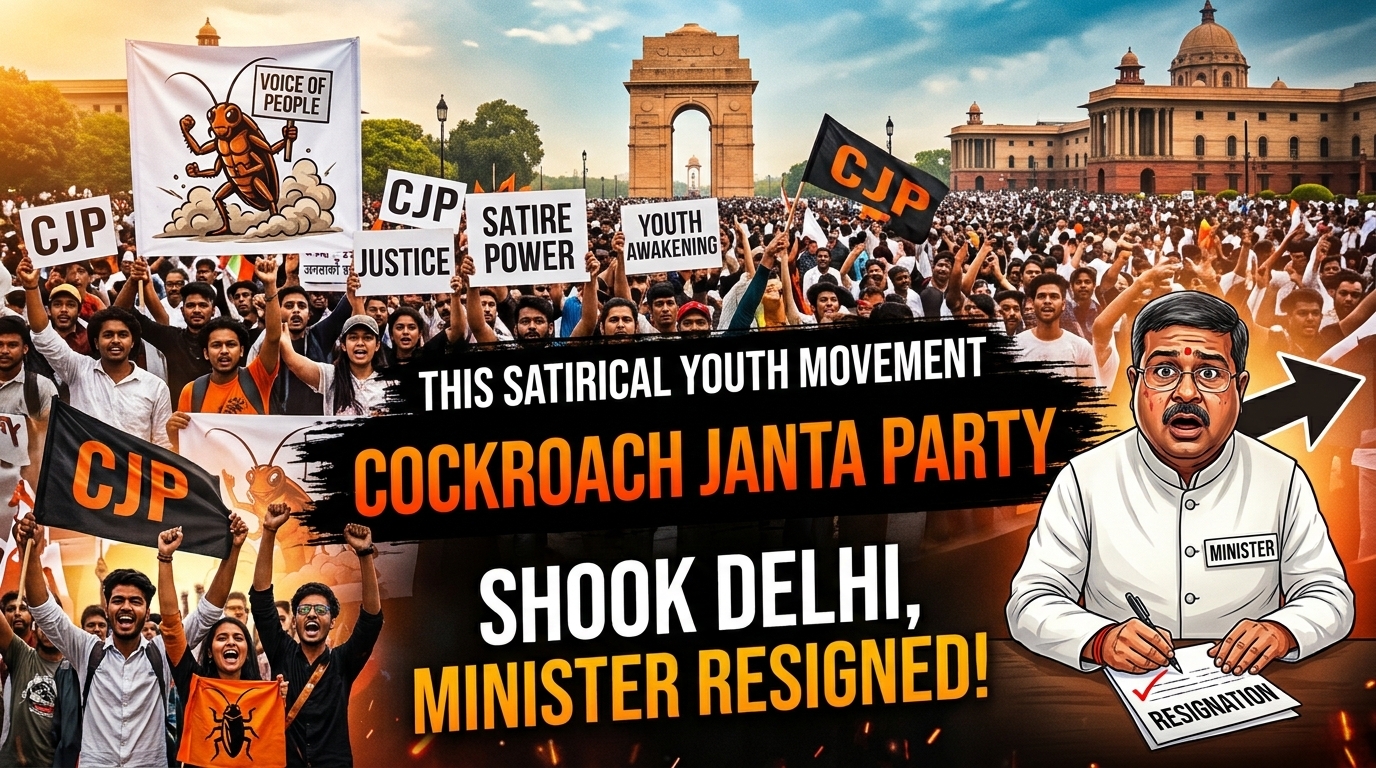
The CJP was established in May 2026 and represents the growing discontent among young Indians related to unemployment and cheating in exams. It was launched by Indian origin pro, Abhijeet Dipke of Boston, as a satirical platform. Its subject matter was exams reform, media freedom and institutional accountability, and unemployment.
Growth was explosive. In days, the movement had 22 million Instagram followers. It was later reported that its X was deactivated under the guise of national security reasons.
The Spark: The NEET Paper Leak
A file of questions given for a nationwide exam that was scheduled for May was circulating on messaging apps. NAT and the CBI came under the scanner in the NEET-UG case. The agitation had the Minister of Education, Dharmendra Pradhan, resign.
A series of photos from the Delhi Protests. A series of photographs of the Delhi Protests.
- On June 6, the CJP protested over Dipke during a protest at Jantar Mantar after getting police's permission. Activist Sonam Wangchuk joined in.
- The march towards Parliament by the “Chalo Sansad” was on 20th July.
- On July 21, Rahul Gandhi along with several dozen of Congress lawmakers started a sit-in outside Modi's residence.
- The agitation had come to a close by July 25 in response to negotiations with the Government.
- On August 24, the CJP announced that there will be a march again on September 5.
- July 20: The Day Delhi Held Its Breath
Despite a ban by police, thousands of people marched on the first day of the monsoon session of Parliament. Edged by a senior police officer, the crowd numbered in excess of 10,000. Police fired tear gas and used batons to break up the demonstrations. Scores were injured.
Official Response: Two Versions
Delhi Police has refuted allegation of any violence and has claimed that it handled the incident professionally. Police had already given prohibitory orders under Section 163 of the BNSS to avoid crowding outside Jantar Mantar when the protest was underway. Both stated that there was no permission granted for the march and the CJP didn't ask for it.
Victory, and Unfinished Business
Dharmendra Pradhan resigned from his post of agitation conclusion and the agitation came to an end on 25th July. The government also gave compensation for the families of NEET aspirants who have taken their own lives and withdrawal of FIRs against the protesters.
The truce didn't last long, however. The CJP on August 24th issued a call to action and a march from India Gate to Delhi Police's headquarters on August 5 stating that it had not fulfilled its promises. At the time, no request for permission was received, police said. It was not possible to determine result of the march of Sept. 5.
Why It Matters
Reuters hailed the lathi bandi as the biggest public opposition to Prime Minister Narendra Modi's third term. Social media can be just as explosive as the streets, as this episode demonstrates. It also introduces the concept of 'Integrity in Exams' and 'Youth Unemployment', and the 'Rights to Protest' at the heart of Indian politics.
Conclusion
In less than a few weeks, the CJP secured its main demand. Its struggle for implementation of the government's commitments is yet not over. Stay tuned with Jantar Mantar and India Gate for the next chapter.
Note: This material has been prepared with the assistance of various international news organizations.